
If you searched for hp lovecraft’s cat name, you are probably looking for a surprisingly specific detail from the author’s childhood. H. P. Lovecraft, the American writer best known for cosmic horror and the Cthulhu Mythos, was deeply fascinated by cats throughout his life. One childhood cat in particular became part of his personal history and later appeared in his fiction.
The cat was a black cat known by the name Nigger-Man, a historical racial slur that is offensive today. Lovecraft referred to the cat fondly in later correspondence, and he reused the name for the feline in his 1923 story The Rats in the Walls.
Because the name is offensive by modern standards, it is important to discuss it in its historical context rather than treat it as an ordinary pet-name suggestion.
What Was H.P. Lovecraft’s Cat Name?
Lovecraft’s childhood cat was named Nigger-Man. The cat was black and became one of the most memorable animals in Lovecraft’s personal writings.
Historical sources indicate that the cat belonged to Lovecraft’s childhood household. However, there is no firm evidence establishing who originally gave the cat its name. Some accounts have assumed that Lovecraft himself named it, but researchers have noted that the cat may have been named by an adult in the family.
The name is particularly notable because Lovecraft continued referring to the cat years after it disappeared. His surviving letters show that he remembered the animal with genuine affection.
Why Is the Name Controversial?
The name contains a racial slur that is now widely recognized as deeply offensive. Modern readers should therefore understand it as a historical term rather than a name that is appropriate to use for a person or pet today.
The cat’s name is also frequently discussed alongside scholarship about Lovecraft’s documented racist views. At the same time, historians caution against assuming from the cat’s name alone exactly who coined it or what the original circumstances were. The available evidence does not establish that Lovecraft personally chose the name.
That distinction matters when separating documented facts from later internet speculation.
What Happened to Lovecraft’s Cat?
Lovecraft’s cat disappeared in 1904, when Lovecraft was still a teenager.
That year was significant in the writer’s personal life. Following the death of his grandfather, Lovecraft’s family left their large home on Angell Street and moved to a smaller residence. Around this period, his beloved cat disappeared. Biographical accounts generally describe the animal as having vanished rather than providing a confirmed cause of death.
Lovecraft continued to remember the cat decades later. In correspondence, he described the animal warmly and referred to him as part of his childhood memories. This makes the cat more than an obscure biographical footnote: it became one of the clearest examples of Lovecraft’s lifelong fascination with felines.
Did Lovecraft Use His Cat’s Name in a Story?
Yes. Lovecraft used the same name for a cat in his short story “The Rats in the Walls.”
The story was written in 1923 and published in Weird Tales in 1924. The fictional cat reacts to strange sounds and supernatural events occurring within the ancient walls of the story’s setting.
This was not simply a random name choice. Scholars and commentators have connected the fictional cat directly with Lovecraft’s childhood pet.
In later versions and reprints, the cat’s name was changed to alternatives such as Black Tom or Blackie, avoiding the original offensive term.
Why Did Lovecraft Care So Much About Cats?
Cats occupy an unusually important place in Lovecraft’s writing.
His stories often portray cats as mysterious, independent creatures that seem to exist partly outside ordinary human understanding. That fascination appears especially clearly in works such as The Cats of Ulthar, where cats play a central role in the story.
His personal letters reinforce the idea that this literary interest was connected to a genuine affection for cats. His childhood pet was remembered long after it disappeared, and Lovecraft continued writing about cats throughout his career.
The connection between his real cat and his fiction therefore provides an interesting example of how personal experiences can become material for a writer’s imaginary world.
Lovecraft’s Cat Name and “The Rats in the Walls”
The connection becomes particularly clear in The Rats in the Walls.
The fictional cat belongs to the story’s narrator and becomes sensitive to strange noises that other characters cannot properly explain. The animal’s behavior helps create the story’s atmosphere of uncertainty and supernatural horror.
Using the name of his childhood cat gave Lovecraft a small autobiographical element inside an otherwise fictional horror story. Literary discussions of the story have specifically identified the cat’s name as a reference to Lovecraft’s own pet.
The story’s cat is therefore not simply an invented Lovecraftian creature. It has a documented connection to an actual animal from the author’s childhood.
Was Lovecraft’s Cat Black?
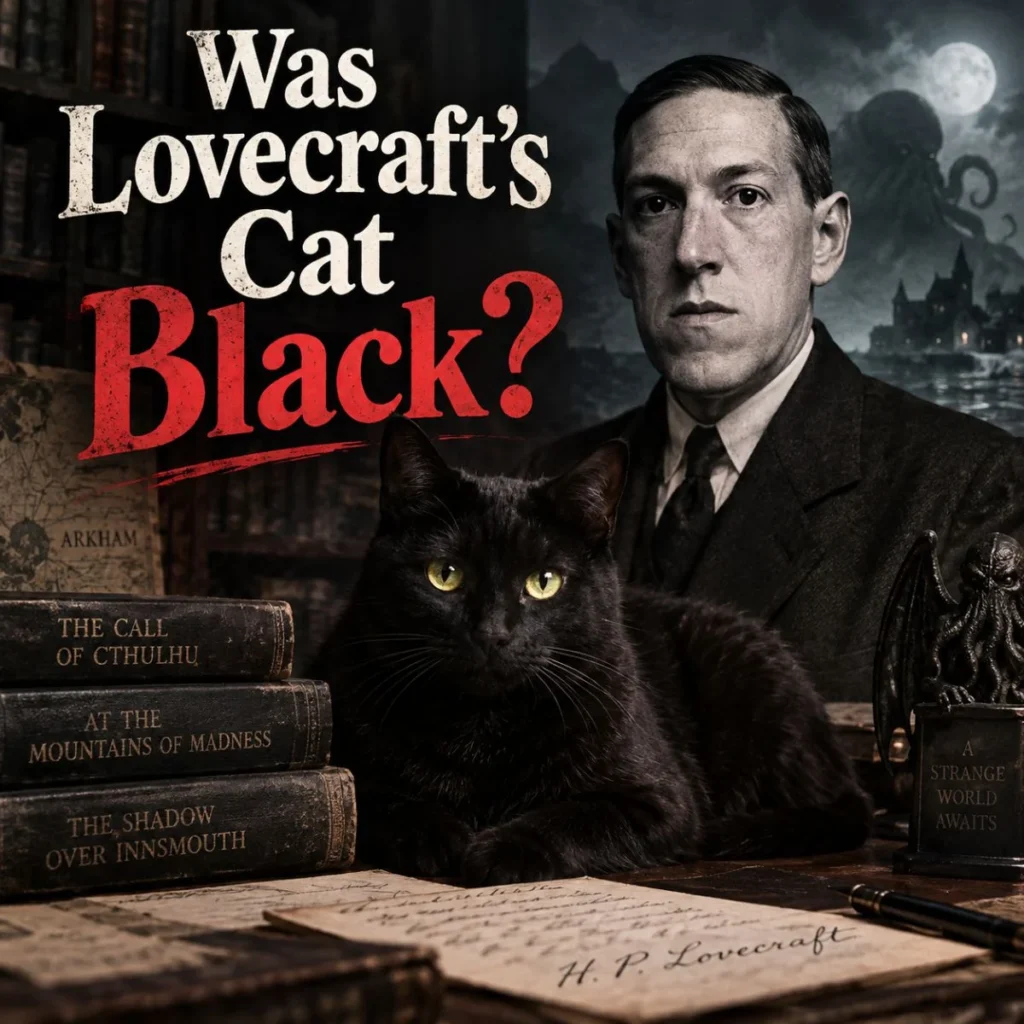
Yes. Historical accounts describe Lovecraft’s childhood pet as a black cat.
This detail is consistent across discussions of the animal and also fits Lovecraft’s own later descriptions of the cat. His letters remembered the animal as black and described distinctive features such as its green eyes.
The cat’s coloring also helps explain why the historical name was associated with the animal.
However, the fact that the cat was black should not be used to excuse or normalize the offensive terminology. The historical context explains the name; it does not make the language appropriate today.
Did Lovecraft Have Other Cats?
Lovecraft had a particularly strong fascination with cats, but his childhood black cat is the animal most directly associated with his biography.
He also encountered and wrote about numerous other cats, including cats belonging to friends and acquaintances. His fiction likewise contains many feline characters.
One important distinction is that the famous photograph sometimes circulated online as “H. P. Lovecraft with his cat” does not necessarily show Lovecraft with his own childhood pet. The childhood cat disappeared decades before many photographs commonly associated with Lovecraft were taken, and no known photograph definitively establishes what that particular cat looked like.
Was Lovecraft’s Cat Black?Was Lovecraft’s Cat Black?
For historical discussion, the name is important because it accurately identifies Lovecraft’s documented childhood pet.
For naming a modern cat, however, it is not an appropriate choice because it contains a racial slur.
If you want a cat name inspired by Lovecraft’s fascination with cats and cosmic horror, there are many alternatives that capture the atmosphere without reproducing offensive language.
Lovecraft-Inspired Cat Names
- Ulthar — Inspired by the mysterious city in The Cats of Ulthar.
- Cthulhu — A recognizable choice for fans of Lovecraft’s cosmic horror.
- Nyarlathotep — A distinctive option drawn from the Cthulhu Mythos.
- Azathoth — Suits a cat with an eerie, otherworldly personality.
- Dagon — A short, memorable Mythos-inspired name.
- Miskatonic — Inspired by the fictional university appearing in Lovecraft’s stories.
- Arkham — A familiar Lovecraftian place name with a darker atmosphere.
- Pickman — Inspired by the artist in Pickman’s Model.
- Randolph — A more subtle reference for readers familiar with Lovecraft’s fiction.
- Providence — A meaningful choice because Providence, Rhode Island, was Lovecraft’s home city.
These alternatives preserve the literary connection without repeating the historical slur.
Frequently Asked Questions
What was H.P. Lovecraft’s cat name?
H. P. Lovecraft’s childhood black cat was named Nigger-Man, a historical racial slur. Lovecraft later used the same name for the cat in The Rats in the Walls.
Was Lovecraft’s cat actually real?
Yes. Biographical and epistolary evidence identifies the cat as a real animal from Lovecraft’s childhood. Lovecraft later referred to the animal in letters and incorporated the cat into his fiction.
When did Lovecraft’s cat disappear?
The cat disappeared in 1904, during the period when Lovecraft and his mother moved from their former family home following his grandfather’s death.
Was Lovecraft’s cat black?
Yes. Sources describe the animal as a black cat, and Lovecraft himself remembered it in those terms in later correspondence.
Did Lovecraft name the cat himself?
That is uncertain. Available evidence confirms the cat’s name but does not conclusively establish who originally chose it. Researchers have noted that the cat may have been named by an adult in Lovecraft’s family.
What story features Lovecraft’s cat name?
The name appears in “The Rats in the Walls,” originally published in Weird Tales in 1924. The story’s fictional cat was based on the name of Lovecraft’s own childhood pet.
Was the cat in the famous Lovecraft photograph his actual pet?
Probably not. The famous photographs associated with Lovecraft and cats do not establish that the animal shown was his childhood pet. His known childhood cat had disappeared in 1904, and no confirmed photograph of that particular animal is known.
What are some respectful Lovecraft-inspired cat names?
Good alternatives include Ulthar, Arkham, Dagon, Pickman, Providence, Miskatonic, Azathoth, and Nyarlathotep. These names draw from Lovecraft’s fictional world without using the offensive historical name of his childhood cat.
Conclusion
The answer to hp lovecraft’s cat name is a documented but uncomfortable piece of literary history. Lovecraft’s childhood black cat was named Nigger-Man, and the writer later reused that name for the cat in The Rats in the Walls. The real animal disappeared in 1904, yet Lovecraft continued to remember it fondly in his correspondence.
The historical name should be understood in its period context rather than treated as an appropriate modern pet name. For readers interested in the feline side of Lovecraft’s work, names such as Ulthar, Arkham, Dagon, or Providence offer a way to capture his mysterious atmosphere without repeating offensive language.

Muhammad Yousaf is a content writer and naming researcher at NamesLixa. He focuses on researching and publishing creative, meaningful, and easy-to-understand name collections for babies, pets, teams, businesses, gaming, and more. His mission is to help readers find the perfect name with confidence through reliable and informative content.